Tips for Landing Offshore Fish in May
Captain Don Walker
Thursday, May 01, 2008
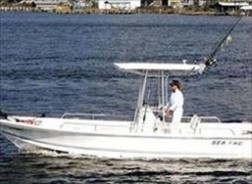
Editor's Note: Captain Don Walker of the charter boat
"Lady D," docks at Sportsman Marina and Dry Dock in Orange Beach,
Alabama, and has fished offshore on Alabama's Gulf Coast for most of his life.
Question:
Don, what will you be catching offshore in May before snapper season begins
next month in June?
Walker: I
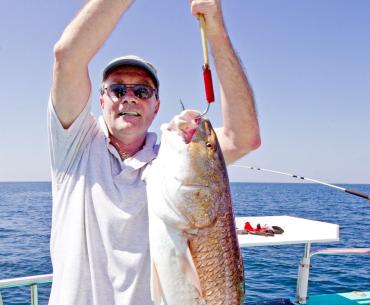
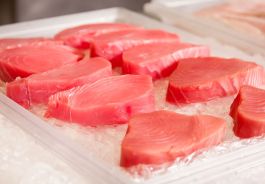
mainly catch tuna, wahoo, amberjack, grouper, triggerfish and beeliners. The
cobia still will be running this month, and we'll be fishing for them along the
beach. The cobia usually stay inshore through the first two weeks of May, and
then they seem to drop off.
Question: How
and where are you catching fish?
Walker: At
this time of year, we catch plenty of amberjack and grouper out in deep water.
Too, we generally, fast-troll for wahoo and slow-troll for tuna.
Question: How
big are the amberjack you catch?
Walker: Right
now, we're catching amberjack weighing from 30- to 50-pounds each, and blackfin
and yellowfin tuna. We've had really-pretty water offshore, and now we're
beginning to see grass in the water. From mid- to late-May, the grass lines
will start forming.
Question:
What do you catch on the grass lines offshore?
Walker: Last
year, we had an extremely-productive year with dolphin (mahi-mahi)
and wahoo. Even as early as April, I had a report of a 95-pound wahoo being
caught offshore. Too, while we're tuna fishing, we'll often have a white marlin
or a blue marlin come up and take the bait.
Question: How
far offshore do you run?
Walker: We
usually run about 70 miles off the port of Orange Beach.
Question:
Tell me about your 18-hour-and-longer day trips.
Walker: We
generally go straight out for tuna, wahoo, dolphin and marlin. On the return
trip, we usually stop off in the more-shallow water and catch amberjack,
grouper, triggerfish and beeliners. At the beginning of May, the gag grouper
and the scamp are showing-up, and of course, you'll catch plenty of red
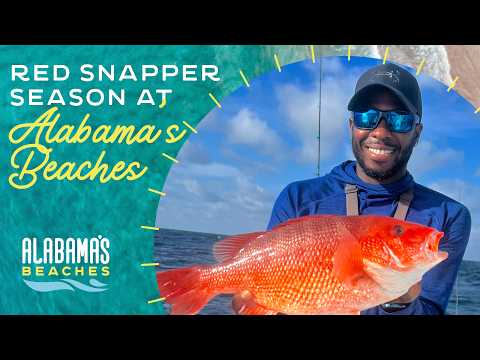
snapper. Even though you can't keep red snapper until June, you still can have
a lot of fun catching and releasing them. Right now, the snapper we catch
offshore weigh 5- to 10-pounds each, and catching a 15 pound or larger snapper
isn't unusual.
Question:
What's the advantage of making an 18-hour trip over an 8-hour or a 12-hour
trip?
Walker:
People want to get more fishing for their dollars. So, by taking an 18-hour or
a 2-day trip, the anglers get more fishing time and less running time. When you
go offshore, you're fishing an area that isn't fished as much as many of the
inshore reefs, and you're fishing in deeper water for bigger fish. Too, your
chances of catching and keeping more fish are much better on longer trips than
on shorter trips.
Question: On
those 18-hour, 2- and 3-day trips, you have bunks where your
clients can sleep
and a galley where hot food can be prepared, right?
Walker: Yes,
we do. The only thing we lack on our boat to make it almost as comfortable as
home is a washer and a dryer. We just put in a new 40-inch flat-screen TV, so
our fishermen can stay up-to-date with the latest news, weather and sports, and
they can watch their favorite TV shows, when they're not fishing.
To fish with
Captain Don Walker or find out about fishing offshore, write to him at PO Box
27, Orange Beach, Alabama, 36561, call him at 251-747-1623, or go to www.ladydcharters.net.