Flounder Gigging
in Gulf Shores & Orange Beach
It’s that time of year again when you can beat the heat of late summer-early fall and enjoy wading in Alabama’s beautiful coastal waters to search for one of the best-eating saltwater fish species – flounder. These calmer days and nights mean it’s easier to spot these flat fish that are settled into the bottom with camouflage that would make any hunter envious. While most flounder are caught with hook and line, the nighttime stalk of these fish with a gig is special.
Flounder Gigging on Alabama's Beaches
Best Conditions for Flounder Gigging
Certain weather conditions make it a lot easier to succeed with a gig along Alabama’s Beaches. Ideally, there will be calm or very little wind. A rising tide, at least halfway back from a low tide, is when the flounder move into the shallow water to ambush bait fish. Sometimes a neap tide (when the tide moves very little) will work, but a low tide pushes the fish back out into deeper water, and they are much harder to spot and gig. A light north wind that smooths out the waves is about as good as it gets. A south wind tends to make the water murky along the shoreline, which makes it harder to spot the flounder.
Best Gear for Flounder Gigging
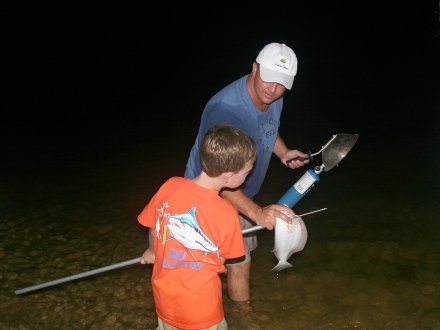
Back in the day, the flounder rig consisted of a Coleman-type lantern with a reflective shield that kept the gigger from being blinded. Lighting for flounder has come a long way since then. Today’s serious gigger comes with a battery-powered light mounted on a shaft. Those use a small garden-tractor battery attached to a backpack frame. The 12-volt sealed light can be submerged, eliminating reflections from ripples. The underwater lighting system also considerably increases your field of view. If you become a seasoned gigger, you can often spot flounder out 20 feet in front of you instead of the normal 6 or 7 feet with a traditional light.
Tips for Flounder Gigging
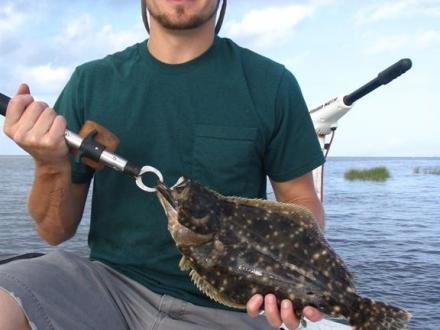
When it comes to taking aim after spotting a flounder, you have to take into consideration the refraction of the light through the water’s surface that gives the illusion that the fish is farther away than it actually is. Therefore, always aim low. As you approach a fish, don’t make any quick movements. Ease your gig into the water and make the thrust without going through the water's surface. And don’t stab your gig into the sand when you’re walking. That noise of the point penetrating the sand can sometimes be enough to spook the fish. The best places to find flounder are areas with a hard, sandy bottom with long, parallel lines in the sand near the beach.
Flounder in Gulf Shores & Orange Beach
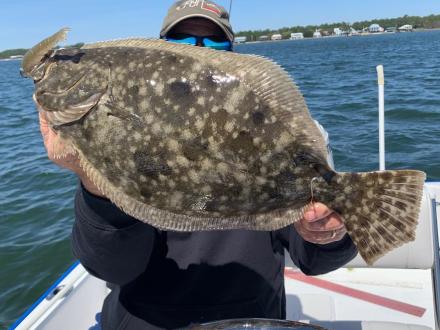
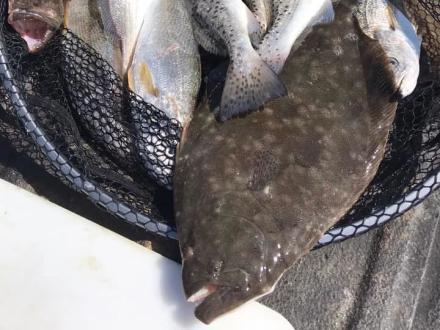
In Alabama waters, two subspecies of flounder can be found: the Southern flounder and the Gulf flounder. The Southern flounder is much more common, has more subtle colors and can get really large. The state record flounder is a whopping 13 pounds, 3 ounces. Alabama is on the western edge of the range of the Gulf flounder, which is typically smaller, but the coloration is much more pronounced. When you’re walking the beaches closer to Gulf Shores, your likelihood of encountering Gulf flounder increases.
Flounder Regulations
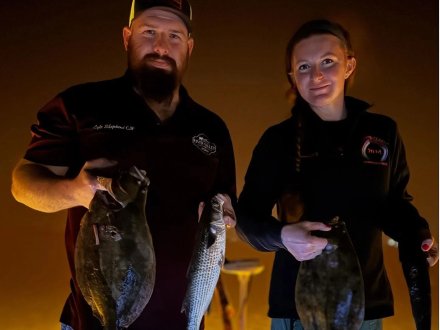
Alabama’s saltwater fishing regulations include a flounder bag and size limit of 5 fish per person with a 14-inch size minimum, so be sure the fish is legal size before you thrust the gig. A saltwater fishing license is also required. Be sure to remember that flounder fishing season is closed the entire month of November to protect the fish’s spawning activity.
How to Cook Flounder
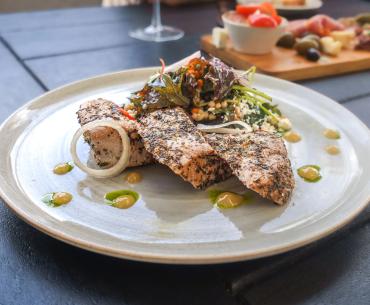
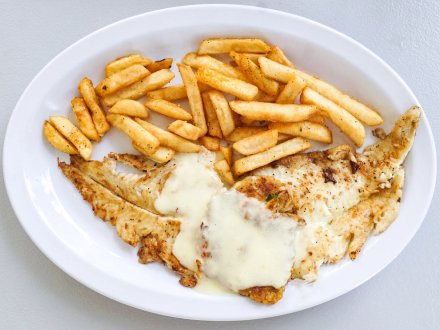
If you have a successful outing, a delicious meal awaits: a fish with mild, flaky white flesh that can be prepared in many ways. If you have luck finding the big ones, you can filet the fish and fry or sauté them in numerous ways.
Of course, my family’s favorite is to clean the fish, scaling the flounder on both sides. Then we rinse, pat dry and take a sharp knife to cut a crisscross pattern on both sides of the fish. I then sprinkle both sides with salt and pepper and coat them in Zatarain’s Fish Fry mix. I have a very large black iron skillet that I use on my burner to heat peanut oil to 350 degrees. I ease the fish into the hot oil and fry until golden brown.
Another method I love is to grill whole flounder. The preparation is the same as you’re going to fry it whole, but I sprinkle Cavender’s Greek Seasoning liberally over the fish, making sure some of the seasoning gets into the scored areas. When the grill is hot, I place the fish on top of aluminum foil. When the fish flakes in the thickest area, it’s time to dine on my favorite inshore species on the Alabama Gulf Coast.

David Rainer
David Rainer has written about the great outdoors on the Alabama Gulf Coast for more than 20 years. For 14 of those years, he covered the many fishing opportunities on the Gulf Coast as outdoors editor at the Mobile Press-Register. He is past president of the Southeastern Outdoor Press Association and currently serves on the Gulf of Mexico Fishery Management Council's Outreach and Education Advisory Panel and the Alabama Gulf Coast Reef & Restoration Foundation board.