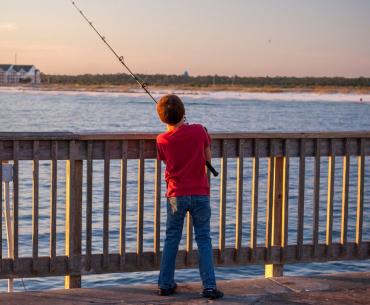
Fishing on Little Lagoon
In Gulf Shores & Orange Beach
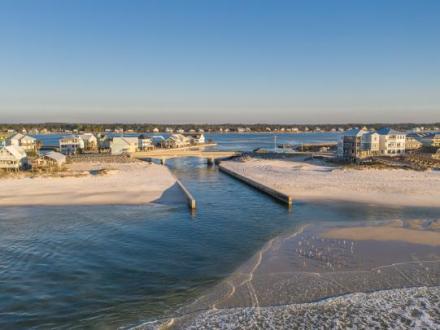
Folks who turn down Fort Morgan Road will quickly notice a body of water to the south, and many people wonder what those tranquil waters are. It happens to be Little Lagoon, a brackish water haven that allows anglers to hook various inshore saltwater species.
One of the best features of Little Lagoon is that it can provide a place to fish when the weather or fishing conditions are too bad to fish in other inshore waters on the Alabama Gulf Coast. And if you stick with it, you’ll likely end the day with a nice box of fish. You do need a saltwater fishing license to fish the Lagoon.
Little Lagoon in Gulf Shores
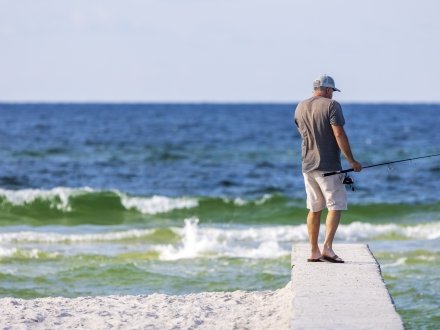
Fishing in Little Lagoon
The Lagoon is about 8 miles long and ranges from a ½-mile- to ¾-mile across with a mix of saltwater from the Gulf and the tannin water from the drainages on the west end. The salinity of the water depends on the tide cycles and Little Lagoon Pass, a small outlet to the Gulf that is regularly dredged to maintain the most beneficial water flow and quality. On the sandier bottom of the east half of the lake, waves of sandbars formed by the tide and wind action provide ambush points for species like speckled trout, redfish, white trout, and flounder. Little Lagoon is also known for housing huge croakers.
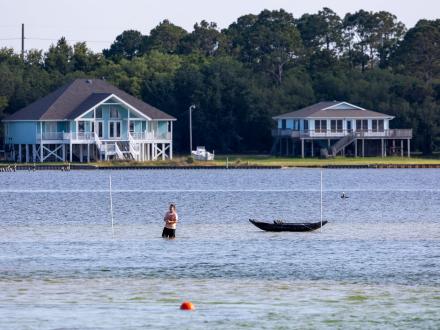
Tips for Lagoon Fishing
Most anglers use boats to reach the best fishing in the Lagoon and visit Mo’s Landing, located 1.8 miles west of Hwy. 59 on Fort Morgan Road. Most anglers use strategic drifts with the wind to find the fish, but the Lagoon is known to throw a curveball regularly. The fish move around the Lagoon, so you’ll usually have to do some searching to find them.
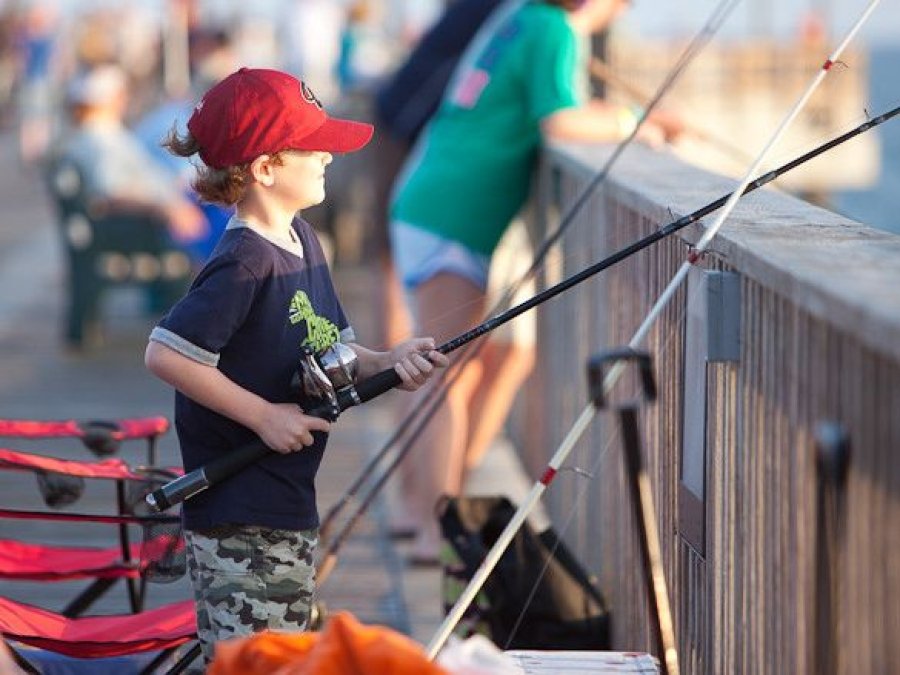
Light spinning tackle with a 10-pound test line usually works best because of the relatively clear water in the Lagoon, which makes stealthy drifts important.
For those who want to do a little wade fishing near the pass, head over to Lagoon Pass Park, and the sandy bottom makes for easy access. It’s also a spot where flounder like to hang out.
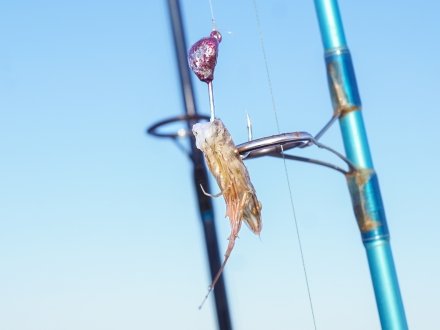
Best Baits
The tackle shops in the area offer a variety of live bait available throughout the year. If available, try bull minnows, menhaden, and alewives. Depending on the time of year, using live shrimp can be an expensive proposition, but during the warmer months, everything dines on shrimp, including those aggravating pinfish and other bait stealers. So, if you’re going to use live shrimp, take plenty. The good news is that when the water cools in the fall, the bait stealers are less active and live shrimp can be the bait of choice. For artificial lures, try minnow-imitation plastic jigs, Gulp shrimp, Mirrodine crankbaits or topwater baits, like Zara Spooks.
Lagoon Species
You may be catching 16- and 17-inch speckled trout regularly when you feel a strike with a 5- to 6-pound trout on the line. Big 22-inch redfish are also found in the Lagoon, but it’s hard to establish a pattern. As my buddy said, it’s a ‘hunt and peck’ body of water. Because of the Lagoon’s relatively low tide movement, the target species seldom form schools because the baitfish and shrimp are scattered. The wind can affect the current considerably in the Lagoon.
During the summer months, the bite is usually best early in the morning and an hour before dusk. In the cooler months, the fish typically stay active all day as long as there is a little tide movement.

David Rainer
David Rainer has written about the great outdoors on the Alabama Gulf Coast for more than 20 years. For 14 of those years, he covered the many fishing opportunities on the Gulf Coast as outdoors editor at the Mobile Press-Register. He is past president of the Southeastern Outdoor Press Association and currently serves on the Gulf of Mexico Fishery Management Council's Outreach and Education Advisory Panel and the Alabama Gulf Coast Reef & Restoration Foundation board.